10 New '90s DC Comics Characters Who Actually Worked
转载声明:本文转载自 CBR,版权归原作者及原媒体所有。
The '90s were a weird time for comics, and it goes without saying that it was definitely going to take a toll on DC Comics . What was a changing landscape where extreme violence and superficial darkness seemed the norm, this company still managed to crank out a lot of great series, to the point that a lot of fans nowadays appreciate what was done at the time. Moreover, when trying to shake things up in the status quo to keep readers engaged, DC presented new characters . . . and, surprisingly, many of them managed to work quite well.
The surprising part is due to how a lot of '90s characters tend to be written off as mere edgy caricatures that don't have any meaningful substance or contribution. However, that wasn't the case with these characters, who happened to have compelling arcs, great stories, and went on to become beloved players in the DC universe long after the decade was over. That's a prime example of a new character actually working well and building a following.
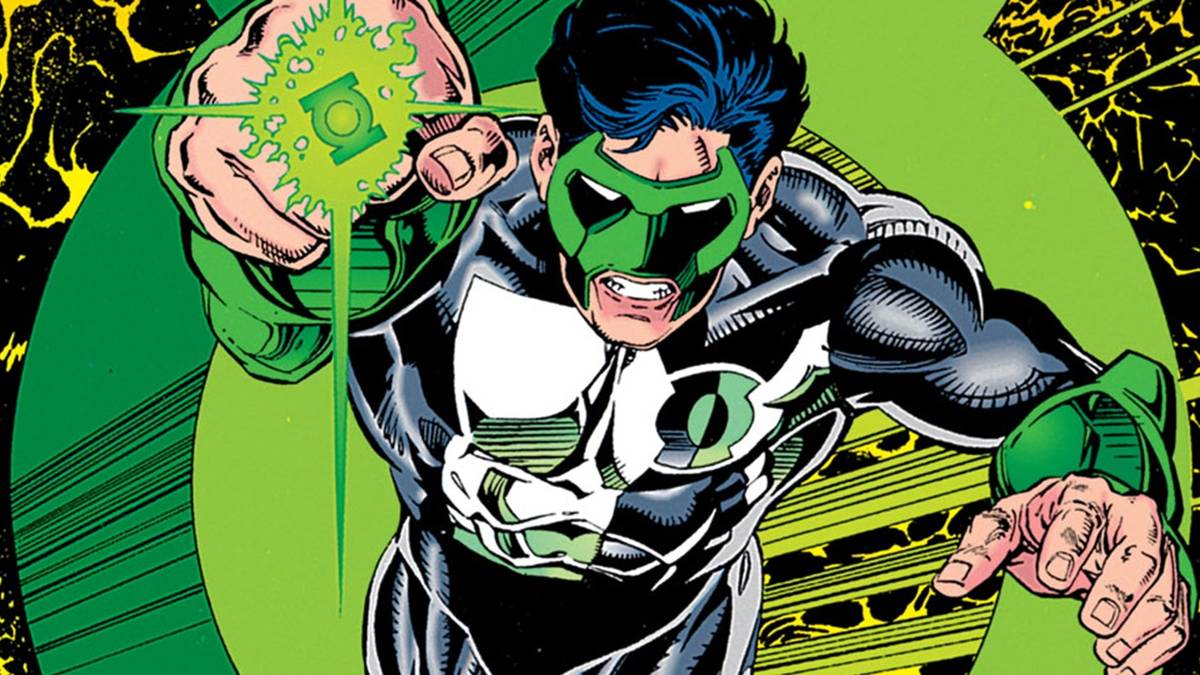
It's fair to say that turning Hal Jordan into the villain known as Parallax was an interesting idea that DC never fully fleshed out (more on that later), but having the most iconic Green Lantern go rogue and destroy the Corps had an interesting side effect: it built up the scenario for the arrival of Kyle Rayner as his replacement. And written by Ron Marz during the bulk of the character's existence in the '90s, Kyle went on to become one of the most beloved Green Lanterns to this very day, and his solo run revitalized what was a weakened title at the time of his appearance.
One of the elements that made Kyle shine during the '90s, an era defined by darkness and a lot of violence, was that he was a traditional DC hero through and through. He was very human, he was making mistakes as he was learning on the job, but his moral code and his actions were always on the side of good. Furthermore, his design and creative use of constructs with his ring also gave the Green Lantern title a degree of coolness that wasn't present at the time.
Replacing iconic characters is always a very difficult task, and DC definitely had a challenge after turning Hal into a villain, which was bound to infuriate a lot of longtime fans. However, Kyle, both in-universe and in real life, proved to be a worthy replacement, which is why he has stuck around ever since, having a lot of great moments even after Hal and the rest of the Corps' return .
Great characters are not only heroes; they can also be great villains, and Bane was a prime example of that. Until that point, it was easy to think that Batman had Gotham under his control. Sure, there were still criminals around, but he had the ability and resources to keep them at bay. However, all of that changed with the arrival of Bane and the Knightfall storyline, which basically broke Bruce Wayne on a mental and physical level.
Part of what made Bane so effective was his combination of brains and brawn, having figured out Batman's secret identity, slowly tiring him out by having the Dark Knight fight other villains without rest, and then fighting him, effectively breaking his back and removing him from the equation in the process. It was one of the few times when the villain effectively defeated Batman in such a definitive manner , which is why the character has stuck around, even going as far as being adapted in Christopher Nolan's movie trilogy, which says a lot.
When Superman died at the hands of Doomsday in the '90s, it was a momentous occasion for the people at DC Comics. Back then, characters dying in comics weren't viewed as a cheap way to get sales and most of them stuck for a while. Therefore, without Superman around, there were several characters who appeared to take over the vacant space that was left behind by the Man of Steel. One of them was Conner Kent, who would go on to become Superboy, bringing back that moniker for the post-Crisis era.
While Conner initially came across as a "trying too hard" cool character, he grew and grew throughout the years, becoming someone with a lot of substance and his journey was very compelling to witness. Since he was a creation made out of the DNA of Lex Luthor and Superman, there was an obvious identity crisis (pun intended) going on with his character, which is something that a couple of writers tackled during his prime years in the '90s and 2000s. He is someone who has become a generation's Superboy , which says a lot in the grand scheme of things.
Impulse is a very similar case to Superboy in the sense that he was a character who was obviously created to tap into '90s tropes, to the point of being called Bart, an obvious nod to The Simpsons. But beyond that, Impulse proved that he had enough value to stand as a valuable character, which is why he got a solo title that ran for several years and became a long-standing member of the Teen Titans, even going as far as becoming Kid Flash and even The Flash for a while.
The descendant of Barry Allen from an alternate future, he was brought back to the past, so Wally West could help him with his powers, which leads to what is initially a difficult relationship, but they eventually learn to get along. Moreover, the character branched out the Flash family, even going as far as developing a bond with Max Mercury, the Speed Force guru. Overall, Impulse was well-received, and while it is a shame that the character is not used that much these days , he was still a hit at the time.
Now, to be honest, Tim Drake made his debut in DC Comics in late 1989, but the vast majority of the work that was done with the character happened in the '90s, so it is fair game. Moreover, it has to be said that Tim had a very difficult challenge when he first arrived: the role of Robin came under scrutiny at the time because a lot of people didn't like the idea of Batman getting kids involved in the battlefield, especially after the consequences of the death of Jason Todd, the second Robin. Therefore, the character of Drake had the difficult task of winning over new fans and making the role of the Boy Wonder viable.
Surprisingly enough, Tim pulled it off. The character's intelligence and commitment to the cause made him quite endearing to readers, especially because it was balanced by his day-to-day activities as a regular teenager . It sounds crazy now, but Tim managed to have a long-running series as Robin, which is something that doesn't happen very often in DC Comics. It is a great example of how the character has become a mainstay of the Batfamily.
Furthermore, even though he was eventually replaced by Damian Wayne, a lot of people still consider Tim to be the best Robin. It makes a lot of sense because of the virtues that were already highlighted, but also because he supported Batman during several notorious storylines and was involved in several books and events. He was simply a great character who managed to win over audiences with great stories and writing.
Okay, this is a weird one, but it makes sense when analyzing it. When Hal Jordan became a villain, he committed a lot of atrocities that were very difficult to come back from. However, when Geoff Johns took over the Green Lantern title in 2004 , he established that the legendary hero was corrupted by the yellow entity of fear, which was called Parallax. This would recontextualize Hal's actions as a villain in the '90s, explaining that his doubts and fear allowed the creature to take hold of him, albeit with a little help from Sinestro.
Some people have mocked the idea of Parallax, downplaying it as a "space bug", but it gave more lore regarding the Emotional Spectrum in the Green Lantern franchise, provided more context regarding the emerald warriors' weakness to the color yellow, and even provided character development for Hal, since he still allowed the creature to control him. It was a retcon that created this character in retrospect, and made it work, explaining some of Jordan's weirdest behaviors in the '90s.
Cassandra Cain debuted in 1999, but she still counts. The character is the daughter of two world-class assassins, David Cain and Lady Shiva, and was raised as an experiment by his father to create a powerful warrior, hence why she doesn't talk and doesn't know how to read. However, she is found by Barbara Gordon and Batman and ends up being raised by the latter, which results in her turning into a heroine, taking over the title of Batgirl . Interestingly enough, she is also the first Batgirl to have her own solo series.
All in all, Cassandra was an inspired decision to bring back the Batgirl mantle. She had a unique background, a much more peculiar personality than most members of the Batfamily, and her solo run was probably the best as far as the Batgirl title goes. It also proved to be a big triumph for female characters in comics, with Cassandra being able to stand on her own for several years. She has become a bit underrated in recent times, but she is definitely one of DC's best characters from the '90s era.
It's fair to say that a lot of comic book fans have had a lot of Harley Quinn fatigue in recent years, and, truth be told, that's a bit understandable. However, there is no denying that the character has been a massive hit for DC Comics since she first appeared in the '90s Batman animated series, becoming a fan favorite at the time. She was so popular that the comics ended up introducing Harley, and she has been a mainstay of the universe, including having her own solo outings, ever since.
Part of Harley's appeal came from her cute design, her fun personality, and how she gave a much more comedic tone to some of the Joker's escapades, quickly endearing herself to a lot of fans. As time went by, different writers have tried different things with her character, and adaptations throughout the years have only made her profile a lot bigger. It is not crazy to claim that she is one of the most popular DC characters in recent decades.
Much like Harley, Renee Montoya was first introduced through the '90s Batman animated series. A detective from the Gotham City Police Department, she ran into different situations with Batman, and sometimes they had to work together. Eventually, due to her popularity and how easy it was to integrate her into the comics, she became a part of the DC universe, even going as far as becoming the new The Question during a storyline in the 2000s.
Renee thrived because she was a very committed character and someone who was very human, which is something that would be shown in future storylines in the 2000s. Moreover, she gave more focus to the common citizens of Gotham when she was first introduced, adding another element that was much appreciated by a lot of fans.
When it comes to legacy characters in DC Comics, Starman is a name that a lot of new generations might not be familiar with. The character who held the name was initially a man called Ted Knight in the '40s, but during the events of Zero Hour in the '90s, writer James Robinson introduced his son, Jack, as his replacement. From 1994 to 2001, Starman featured Jack as the titular hero , although with several twists to make him more modern and unique in the DC landscape.
The character of Jack revitalized what was a very obscure '40s character for newer generations, and it is fair to say that it has become a cult classic among DC runs, which is something that a lot of newcomers need to check out. There were other men before Jack who wore the mantle of Starman, but it is fair to say that the period with Jack was regarded as the best.